

Why permeable?
StoneSet is built around a commitment to Water Sensitive Urban Design (WSUD), helping to shape more resilient and environmentally responsible infrastructure.
Our system allows stormwater to naturally infiltrate through the surface, reducing pressure on drainage networks, replenishing groundwater, and preventing polluted runoff from entering local waterways. By managing water at its source, StoneSet supports better compliance with stormwater management objectives set by councils and government agencies.
Designed to meet the needs of architects, engineers, and urban planners, StoneSet combines functional durability with architectural flexibility. It is a proven solution across a wide range of applications including public footpaths, tree surrounds, driveways, carparks, and civic open spaces.
How it works?
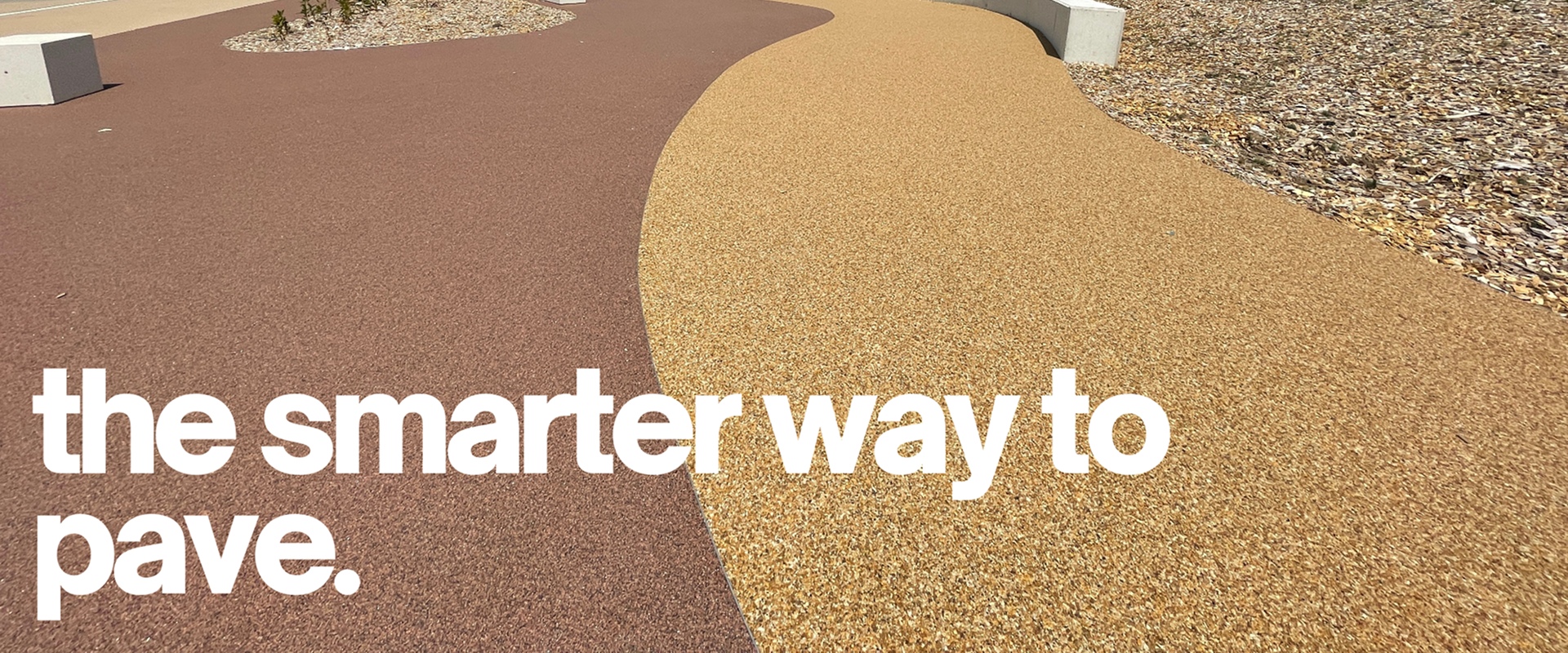
StoneSet Premium is designed with up to 15% void content, achieving porosity rates of 60 L per m² per second. This allows stormwater to rapidly infiltrate through the surface, supporting natural groundwater recharge and easing pressure on urban drainage systems.
Our state of the art resin technology is engineered to provide exceptional strength while occupying only a small percentage of the total surface volume, a non-compacting matrix that retains it’s void content for it’s entire lifecycle. This maximises void content and ensures the natural stone remains the hero of the finish delivering a visually striking, highly porous surface without compromising structural integrity.
StoneSet is always permeable. The underlying base can be tailored to suit the specific demands of each project, whether that’s limited depth, higher compressive strength, or a defined permeability rate offering flexibility across a wide range of commercial applications.
Drainage matrix
StoneSet is engineered to handle the demands of high-traffic commercial environments. For applications such as driveways, accessways and car parks, the StoneSet permeable resin-bound surface delivers a lightweight yet robust finish with high porosity, durability and long-term performance.
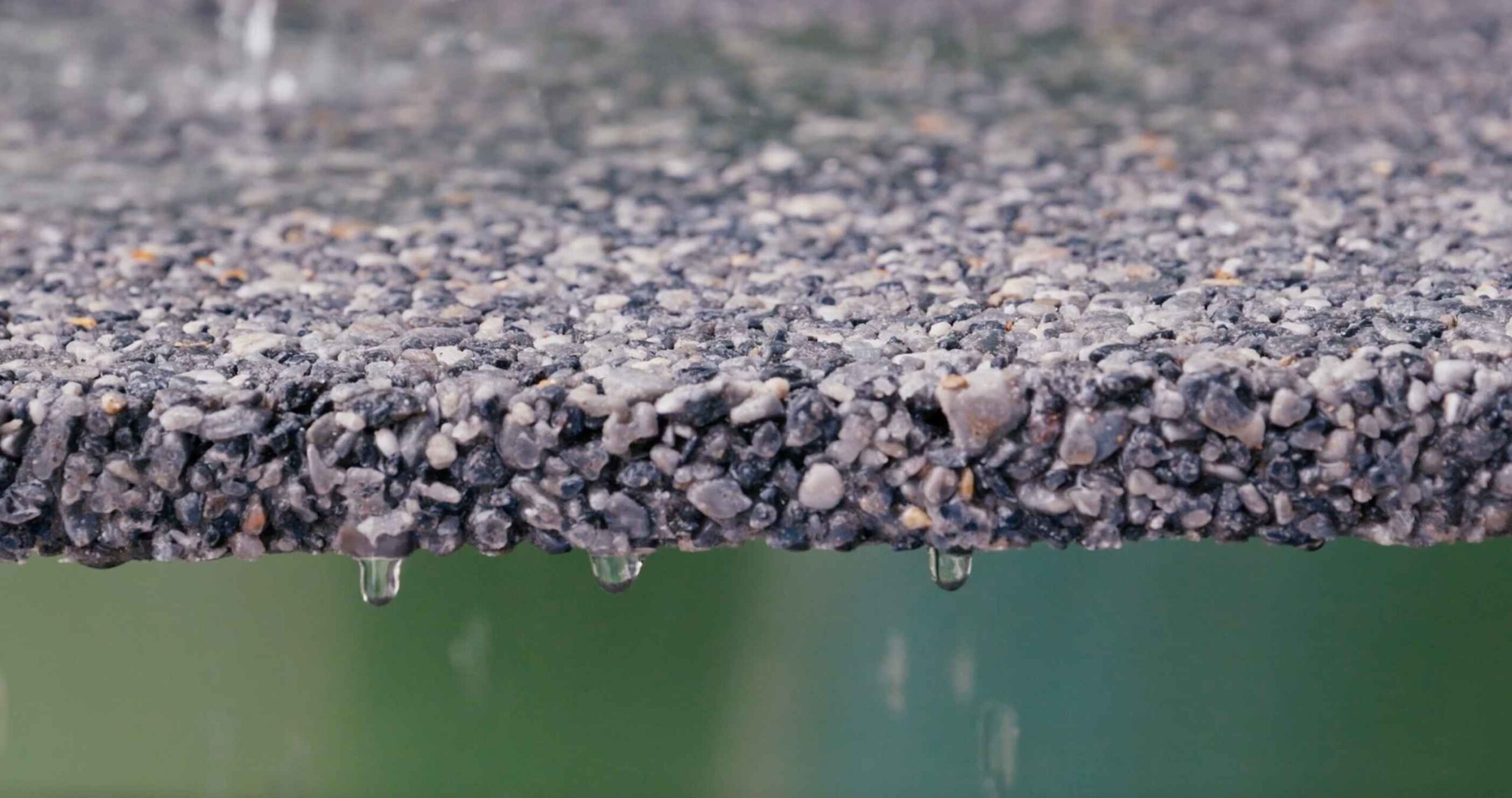
When paired with the StoneSet Drainage Matrix, the surface layer becomes part of a fully integrated resin-bound system. The Drainage Matrix is formed using a non-UV variant of StoneSet’s polyurethane resin blended with larger graded aggregate, creating a highly cohesive, load-bearing and fully permeable structural base that works seamlessly with the StoneSet finish due to their shared physical makeup.
This system allows for a significant reduction in overall depth compared to traditional permeable concrete bases, helping to minimise excavation, protect tree root zones and reduce disruption to existing substrates. Despite the reduced depth, the StoneSet surface and Drainage Matrix combination remains resilient, durable and capable of supporting vehicular loads of up to 10 tonnes, while maintaining the surface’s natural appearance and permeability.

Heavy-duty permeable paving
StoneSet’s permeable resin-bound surface is designed to perform in the most demanding environments, maintaining its lightweight, highly porous characteristics while delivering excellent resistance to traffic, weathering and long-term wear.
For projects requiring the highest levels of structural capacity, StoneSet can be installed over engineered permeable concrete bases. In this configuration, the StoneSet surface provides the defining performance layer delivering permeability, durability and visual consistency while the supporting base achieves compressive strength and load-bearing capacity comparable to traditional concrete through carefully designed additives.
Together, this creates a fully permeable paving system suited to heavy-duty applications such as large commercial car parks, high-frequency traffic areas and infrastructure environments. The result is a resilient, future-ready solution that supports heavy vehicular loads while aligning with modern construction and water-sensitive urban design standards.
Light traffic permeable paving
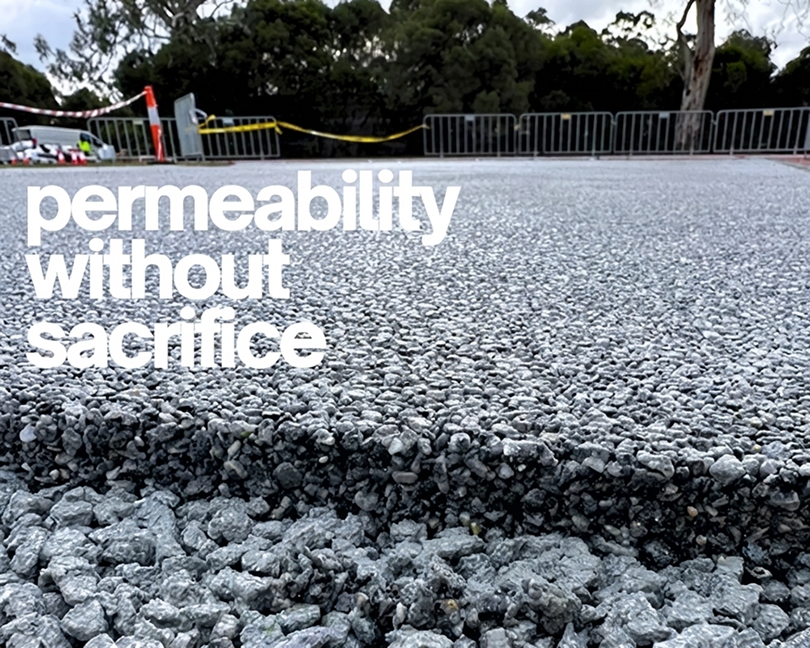
Significant compressive strength is not always necessary. For smaller, lower-traffic applications, a well-prepared aggregate base offers a practical & efficient alternative. This approach helps limit the total system depth, reduce base preparation costs & streamline project timelines.
The seamless nature of StoneSet, laid as what can be described as large knitted sheets of flexible & durable permeable paving, provides exceptional resistance to lifting, shifting & displacement. This reduces the risk of trip hazards commonly associated with traditional segmental paving surfaces.
For projects prioritising maximum permeability, a clean, free-draining aggregate such as blue metal is ideal. Where only moderate porosity is needed, compacted materials like road base remain a suitable & reliable option.
Tree surrounds
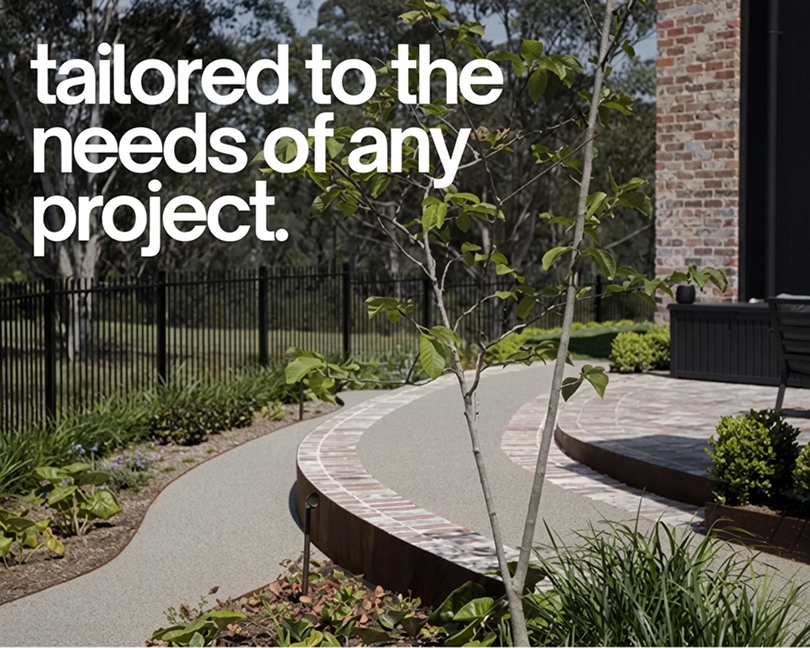
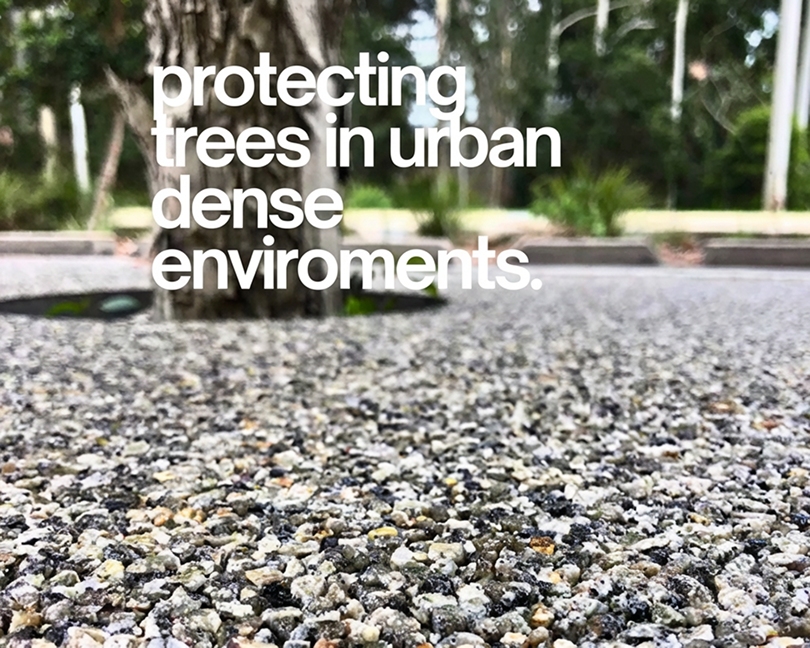
Unlike short-term solutions such as loose stone or mulch, which can erode & create ongoing maintenance issues, or rubber systems that shrink & fail under weather extremes, StoneSet offers a long-lasting, low-maintenance alternative.
Our system relies on advanced resin technology to provide the flexibility required for healthy tree growth, while the stone aggregate delivers surface strength, durability & form retention over time. Combined, these elements create a high-performing, permeable surface that supports both natural processes & functional urban spaces.
Ideal for tree surrounds, root-influenced areas & vegetation zones, StoneSet proves that nature & urban infrastructure can coexist. Whether protecting mature, heritage-listed trees or introducing green life into dense city environments, StoneSet delivers the best of both worlds a durable surface that respects the living landscape.
How does permeable paving contribute to your projects?
- Maximise site yield. Free up hard surface allowances under hard-to-soft landscape ratio requirements, allowing you to deliver more usable area for your client without compromising on function or longevity.
- Meet WSUD objectives. Create safer, lower-maintenance, durable surfaces that still contribute to water-sensitive urban design by allowing water to infiltrate naturally.
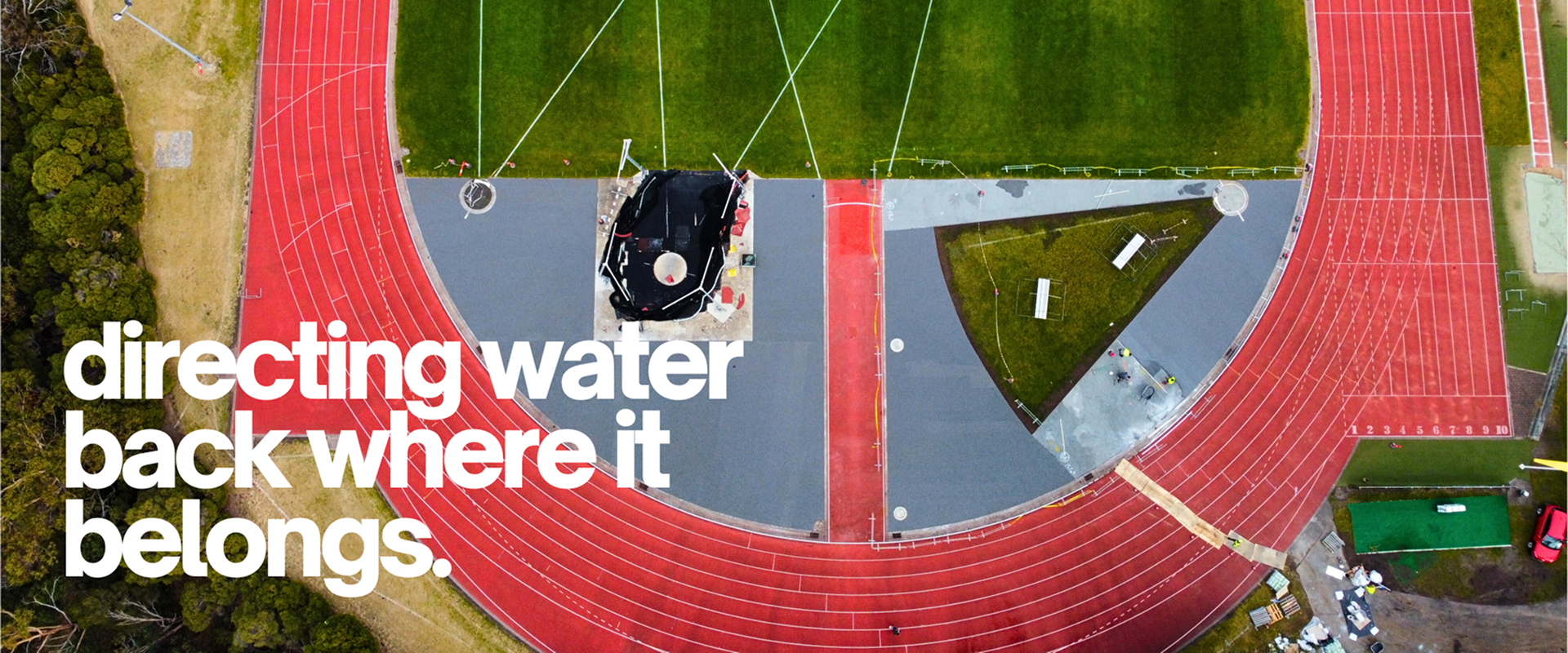
- Reduce runoff & flooding. Capture water where it lands, reducing stormwater discharge into council drains, localised flooding, and the spread of surface pollutants into our catchments.
- Recharge groundwater. Retain water within the soil profile, supporting essential environmental and ecological processes while reducing stress on stormwater systems.
- Enable green urban spaces. Let infrastructure and vegetation coexist by promoting healthier root zones and sustaining urban biodiversity in dense environments.
- Reduce urban heat. Unlike traditional pavements that trap and radiate heat, permeable surfaces contribute to atmosphere cooling by allowing evaporation and reducing surface temperature.
- Prevent pooling. Minimise standing water in high-use or low-lying areas by facilitating consistent infiltration across the surface.
- Prevent erosion. Slowing surface water flow helps stabilise soil and prevent erosion on slopes or exposed areas, protecting nearby assets and landscaping.
Hear from Tori, Co-Founder of StoneSet, describe how a StoneSet surface performs.

FAQs
FAQ’s about permeable paving
StoneSet forms a stable, non-compacting matrix with small but consistent voids, making it highly resistant to clogging. In the rare case that excessive dirt, debris, or sediment builds up on the surface after heavy weather events, a simple pressure wash will restore the paving’s porosity back to its intended performance.
Yes many local councils allow permeable paving like StoneSet to count towards your required “soft landscaping” area. This means you can often have a bigger driveway, patio, or entertaining space, while still meeting council rules and keeping your property environmentally friendly.
In some cases, councils will count part of your StoneSet area as “soft landscaping,” which can make it easier to get your plans approved. Every council is a little different, so it’s always a good idea to double-check the rules for your area.
If your council isn’t familiar with StoneSet, we’re happy to provide all the information and paperwork needed to show that our paving meets their requirements.
To maximise longevity, the base must be properly prepared just as it would be for any surface. Installing StoneSet directly over unprepared soil is not recommended. By following StoneSet specifications, using construction-grade materials, and ensuring secure edge restraints, you’ll achieve the best results. In some cases, a well-retained structural soil base may be acceptable, but this should always be assessed carefully to ensure stability and durability.
Once water passes through the StoneSet surface and its permeable base, it soaks back into the ground to recharge groundwater and replenish aquifers just as it would have naturally before urbanisation.
Absolutely. Water that drains through StoneSet can be captured and redirected for a variety of uses, including garden or landscape irrigation, integration with other WSUD-friendly systems, or even filtration for non-potable applications such as toilet flushing or cooling systems. Because StoneSet allows water to soak back into the ground, it also supports natural aquifer recharge. This is critical for Australia, where around 30% of the nation’s useable water supply comes from groundwater (and up to 70% in some regional areas). By keeping rainwater on-site and out of stormwater drains, StoneSet helps reduce pressure on council infrastructure while supporting sustainable water management.
No. When designed and installed correctly, permeable paving systems like StoneSet do not cause sinkholes. Sinkholes typically form when underground soil is washed away due to uncontrolled water movement. StoneSet is engineered to avoid this the surface and base work together to filter and evenly distribute water into the ground at a natural rate, rather than concentrating flow in one area. By following StoneSet specifications including proper base preparation, the use of construction-grade aggregates, and secure edge restraints the system maintains structural integrity and prevents any erosion that could otherwise lead to instability. In fact, permeable systems often improve ground stability by reducing surface runoff and spreading water infiltration more evenly.