Project overview
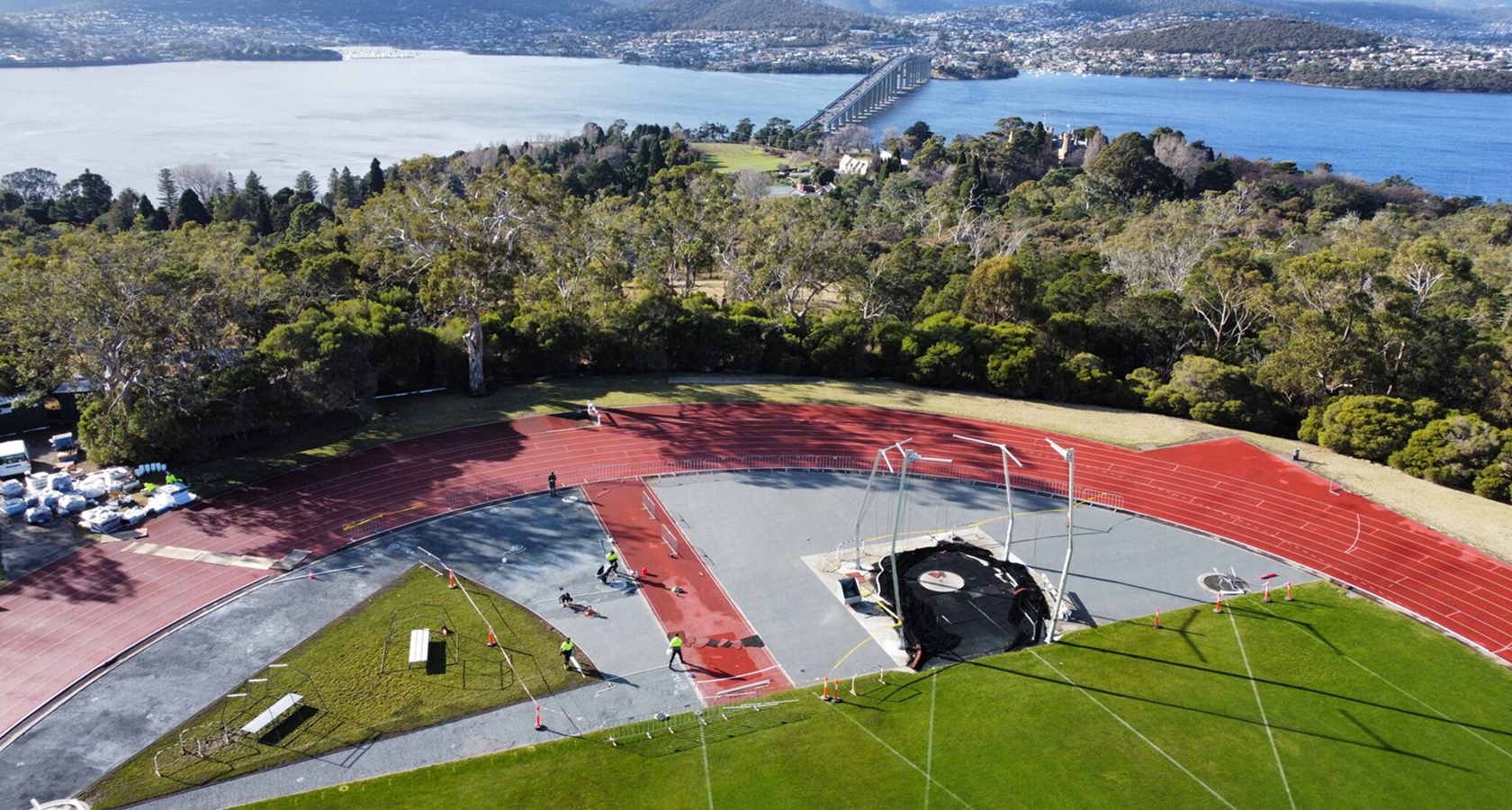
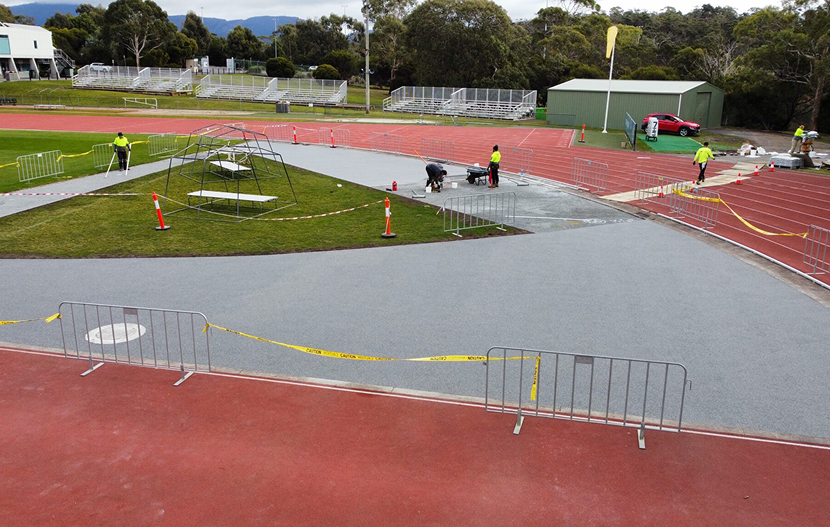
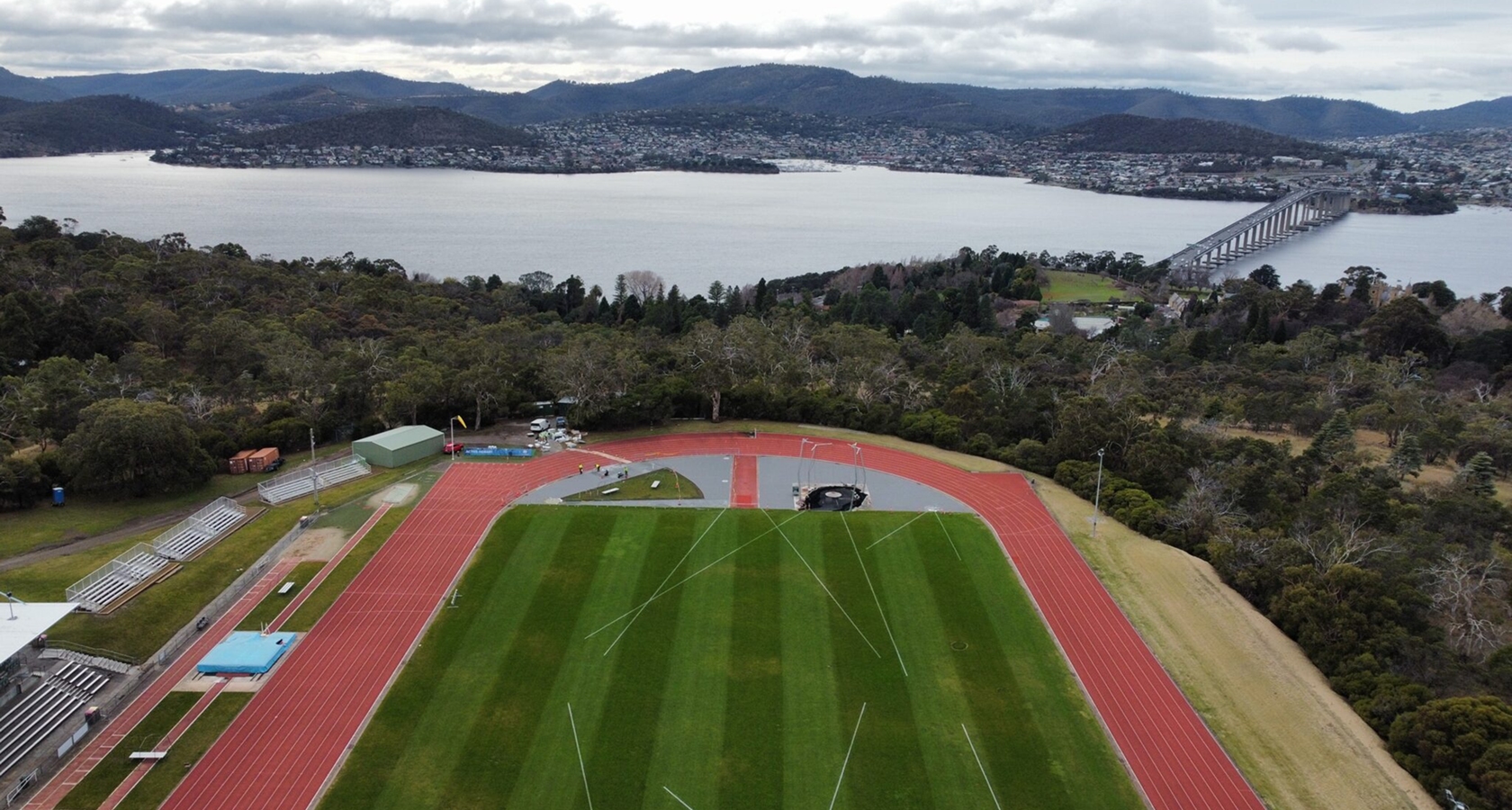
In 2023 The City of Hobart completed a major resurfacing project at the Domain Athletics Centre, with StoneSet’s advanced permeable paving solution playing a key role in the transformation of the throws area. This $300,000 project, funded by the Tasmanian Government’s Improving the Playing Field Grants Program and the City of Hobart, was undertaken to address significant erosion issues that had previously caused surface cracking and event cancellations.
The installation of StoneSet permeable surfaces ensures a safer, more durable environment for athletes participating in shot put, javelin, discus, and hammer throw events. Designed with all abilities in mind, the new surface provides better accessibility, particularly for athletes with mobility challenges, who previously faced difficulties navigating the damaged terrain. By improving safety and usability, this resurfacing project allows athletes of all ages and abilities to train and compete with confidence, enhancing their performance and enjoyment of their chosen sports.
This investment represents a long-term commitment to Tasmania’s athletics community, from Little Athletics to Masters athletes, ensuring that the Domain Athletics Centre remains a premier facility for years to come.
Permeable concrete base
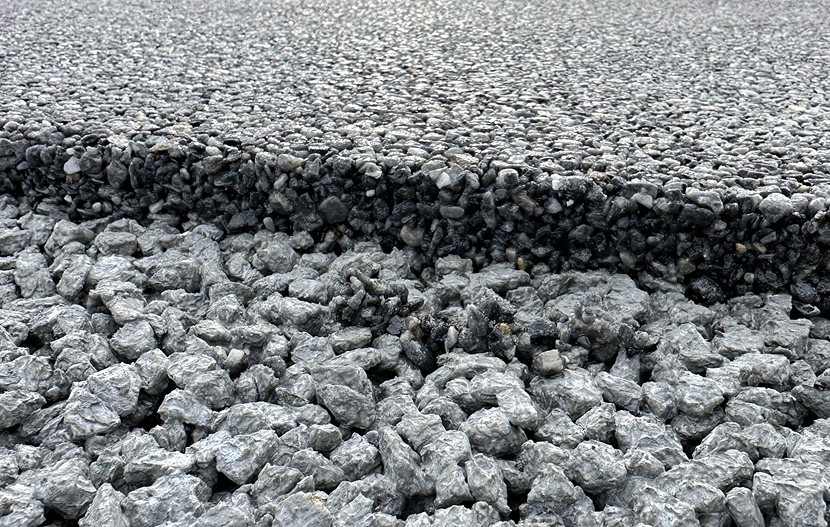
The concrete was a no fines concrete with 10mm aggregate and produced to meet the AS1379 specification. It was installed by Fulton Hogan and supplied by Hazel Bros Concrete. The concrete was specified at 200mm on top of a 7mm blue metal drainage layer.
StoneSet installation
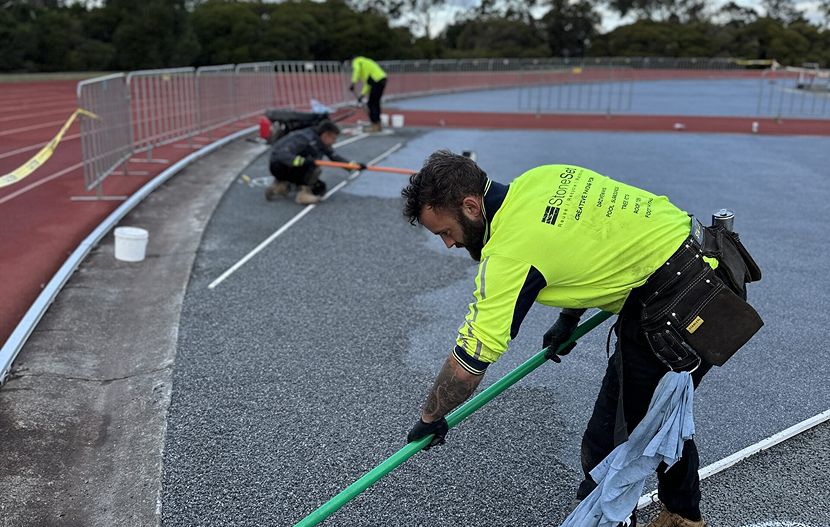
The installation of the StoneSet layer was carried out by the skilled StoneSet team from Sydney, along with Approved Installers from Melbourne. The chosen colour was 6mm Koonunga, a blend of bluish-grey pebbles and crushed marble. This combination provides a robust finish with excellent porosity. Given the chilly conditions of a winter installation in Tasmania, a catalyst was utilised to accelerate the chemical reaction necessary for setting the material.
31,720kg of stone was used with 302 batches of StoneSet Premium UVR Resin.
Permeability testing
An in situ site test was performed to compare the permeability rates of new and existing surfaces. This test involved measuring how long it took for water to penetrate the surface from a 10-liter cylindrical tube, sealed at the bottom with a polyethylene foam ring. The results shed light on the porosity of various surfaces.
Site observations
The tests took place from 11:30 AM to 12:00 PM under dry conditions, with a temperature of 11 degrees Celsius. Although the ground was slightly damp, it was not overly wet, as there had been minimal rainfall in the past 60 hours. The flow rate of the finished no fines concrete surface was slightly impacted due to the failure to achieve a tight seal at the cylinder’s base.
Results summary
The recorded times are essential for calculating the flow rate, expressed in liters per square meter per minute (L/m²/m). The final flow rate is derived from averaging the recorded rates. The findings clearly indicate high porosity levels for both the StoneSet layer and permeable concrete. The advantages of this permeable paving include creating a safe environment for athletes, free from puddles and slip or trip hazards. The absence of water flow onto the track, combined with reduced water accumulation, will help maintain a crack-free and secure surface.
| Surface | Flow rate L/m2/minute | Flow rate L/m2/second |
| Turf directly next to the track | 236.93 | 3.95 |
| 10mm No Fines Concrete Base | 11,007.35 | 183.46 |
| 6mm Koonunga StoneSet | 5,741.04 | 95.68 |