
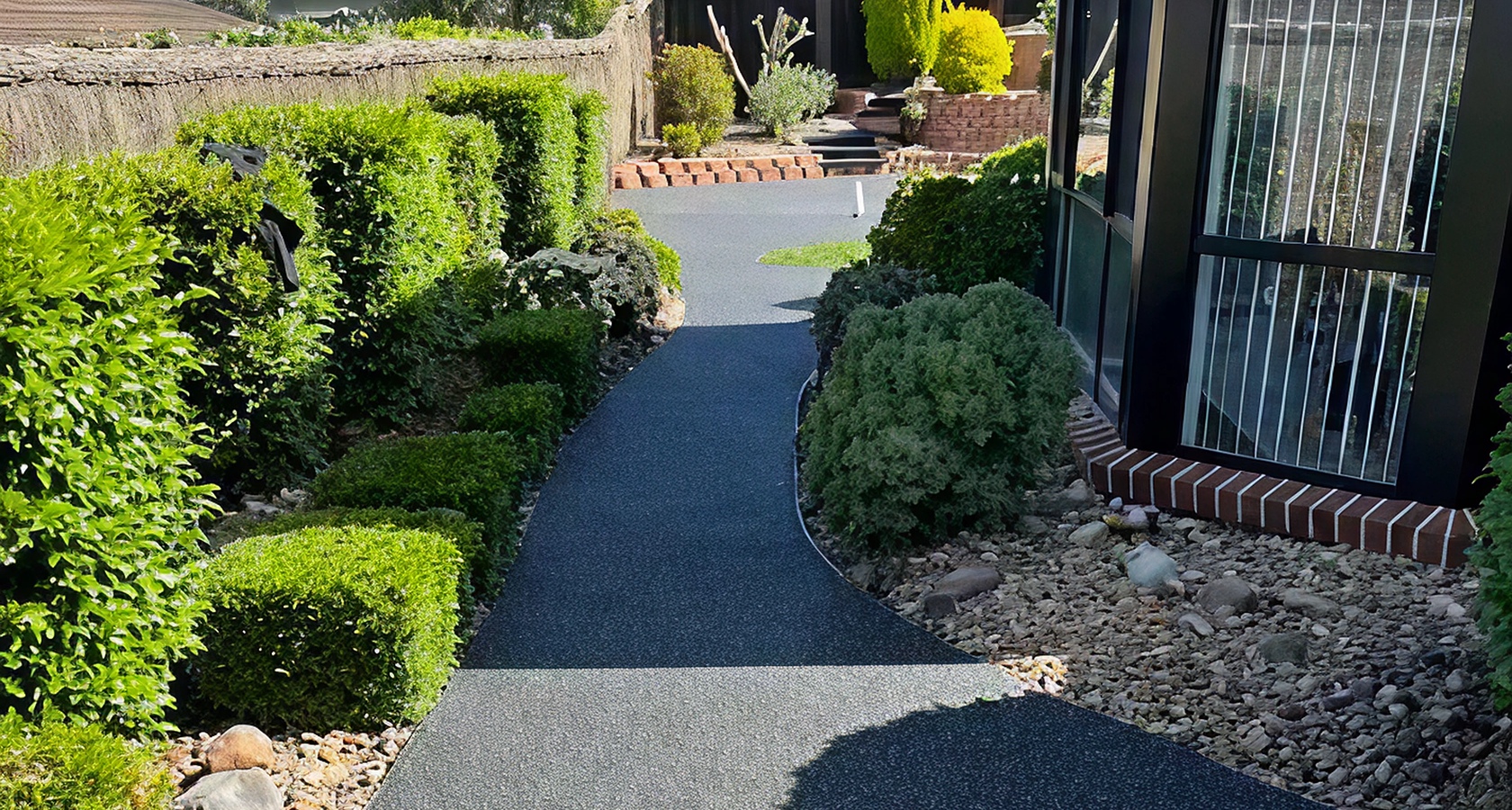
Concrete Resurfacing: What’s Involved and When It Works
Cracked, stained or dated concrete doesn’t always need to come out. In a lot of cases the slab underneath is structurally fine and only the surface has aged — and resurfacing lets you keep the slab and change the finish.
This guide covers when that’s a realistic option, what the work involves, and what to consider before you commit.
Can your concrete be resurfaced?
This is the question worth answering first, because resurfacing isn’t right for every slab.
Usually a good candidate:
- Surface-level cracking, crazing or spalling
- Staining, discolouration or patchy previous repairs
- Exposed aggregate or plain concrete that’s simply dated
- Slabs that drain adequately and sit at the right level
- Old pebblecrete or tired stencilled concrete
Usually not suitable without further work:
- Structural cracking, movement or slab settlement
- Concrete that’s lifting, hollow-sounding or delaminating
The honest position is that resurfacing changes the surface, not the structure. If the slab has a structural problem, that needs resolving first and sometimes replacement is genuinely the better call. An assessment of the existing surface is the only way to know which situation you’re in.
What StoneSet resurfacing actually is
StoneSet is a resin-bound natural stone surface. Natural stone aggregate is mixed with a UV-stable resin and hand-trowelled over the prepared substrate, forming a solid, seamless surface with the stone locked into place.
It isn’t paint, an epoxy coating, a spray-on finish or pebblecrete. Those products sit as a film on top of concrete. A resin-bound surface is a stone surface in its own right, which is why the finish reads as natural stone rather than as a treatment applied to concrete.
What’s involved
- Assessment. The existing surface is checked for suitability — condition, falls, drainage, moisture and edges.
- Preparation. The slab is cleaned and any surface defects are made good. Preparation does most of the work in determining how the finished surface performs.
- Laying. The stone and resin are mixed on site and hand-applied, then levelled and smoothed to an even finish.
- Curing. The surface is left to cure before use, with timing depending on conditions on the day, but normally within 24hrs.
Because the work happens over the existing surface, there’s usually no excavation, no slab removal and no spoil to cart away which is a large part of why homeowners choose it over full replacement.
Where it works around the home
The same system suits most hard surfaces on a residential property:
- Driveways — the surface most people notice first, and the one that changes a home’s street appeal most dramatically
- Pathways and side access — including narrow or awkward runs where new paving is difficult to lay neatly
- Patios, courtyards and alfresco areas
- Pool surrounds — a seamless, slip-resistant finish that’s comfortable underfoot
- Tree surrounds — where a permeable surface allows water and air to reach the root zone
Colour and stone blend are selected from the range, and edging, borders and inlaid detail can be used to break up larger areas.
How long it lasts
StoneSet is designed for a 25-year design life with correct installation and appropriate maintenance. Actual performance depends on the substrate, the system build-up specified, traffic and how the surface is cared for.
Maintenance is straightforward rather than non-existent periodic sweeping and washing keeps the surface clear and helps maintain drainage through it.
Drainage and permeability
Where the appropriate permeable system is used, water drains through the surface rather than running off it. That can help reduce pooling, and it’s often relevant where council conditions apply to hard surface areas or stormwater management.
Whether a resurfacing project achieves full permeability depends on what sits beneath it. Laying a permeable surface over an impervious concrete slab changes how water behaves at the surface, but the slab underneath still directs where that water ultimately goes — so drainage detail matters and should be discussed as part of the assessment.
DIY or professional installation?
StoneSet DIY Kits are available for homeowners tackling smaller areas, and they’re designed to be used with basic tools rather than specialist equipment.
Two things to be clear about: larger areas, driveways and anything with complex falls, edges or detailing are better handled by an Approved Installer, and DIY Kits are not covered by the 10-year guarantee — that applies to professionally installed work only.
Common questions
Will the cracks come back through? Surface cracks are made good during preparation. Structural cracks and slab movement are a different problem and need resolving before resurfacing — otherwise movement in the slab will eventually show.
Can it go over tiles or pebblecrete? Often, yes, subject to the condition of what’s there and how well it’s bonded. This is assessed case by case.
How long before we can use it? The surface needs to cure before use. Timing varies with temperature and conditions, and your installer will confirm it for your job.
Does it get hot underfoot? Surface temperature depends heavily on the stone colour chosen. Lighter blends are generally the more comfortable choice around pools and open areas.
Can we match an existing surface? There’s a broad range of stone blends, and matching the tone of existing paving, sandstone or brickwork is a normal part of the colour selection process.
The next step
If you’re weighing up resurfacing against replacing a surface, the useful starting point is an assessment of what you’ve already got.
Send through a few photos of the existing surface, or request a free estimate, and we’ll tell you honestly whether it’s a good candidate — including when it isn’t.